


GET Real Cisco 350-501 Exam Questions With 100% Refund Guarantee Nov 03, 2025
Get Special Discount Offer on 350-501 Dumps PDF
NEW QUESTION # 241
Refer to the exhibit: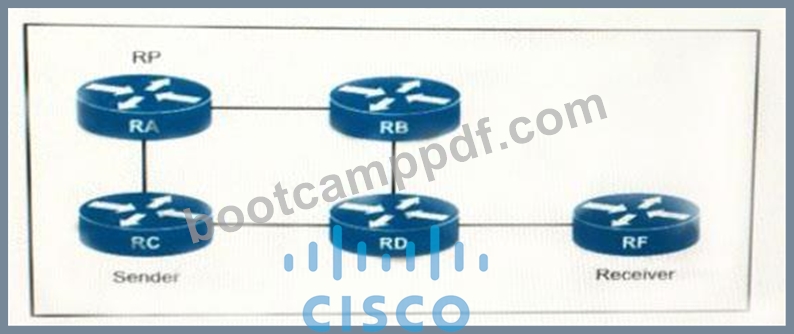
If router A is the RP, which PIM mode can you configure so that devices will send multicast traffic toward the RP?
- A. BIDIR-PIM
- B. PI MM-DM
- C. PIM-SSM
- D. PIM-SM
Answer: A
NEW QUESTION # 242
Which protocol is used for communication between the PCE and PCC?
- A. PCEP
- B. CEF
- C. ICMP
- D. POP
Answer: A
Explanation:
* The PCE (Path Computation Element) communicates with the PCC (Path Computation Client) using the PCEP. PCEP is responsible for path computation and signaling in MPLS networks.
Implementing and Operating Cisco Service Provider Network Core Technologies course materials.
NEW QUESTION # 243
Refer to the exhibit. R1 is connected to two service providers and is under a DDoS attack.
Which statement about this design is true if uRPF in strict mode is configured on both interfaces?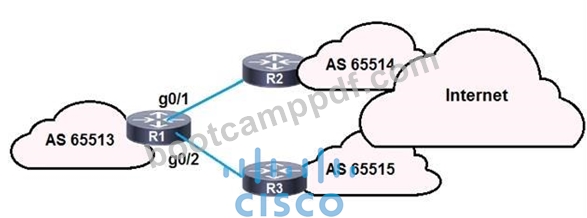
- A. R1 permits asymmetric routing as long as the AS-RATH attribute entry matches the connected AS
- B. R1 drops all traffic that ingresses either interface that has a FIB entry that exits a different interface
- C. R1 accepts source addresses on interface gigabitethernet0/1 that are private addresses
- D. R1 drops destination addresses that are routed to a null interface on the router
Answer: B
NEW QUESTION # 244
Which three OSPF parameters must match before two devices can establish an OSPF adjacency? (Choose three.)
- A. hello timer setting
- B. IP address
- C. subnet mask
- D. area number
- E. process ID
- F. interface cost
Answer: A,C,D
NEW QUESTION # 245
Refer to the exhibit: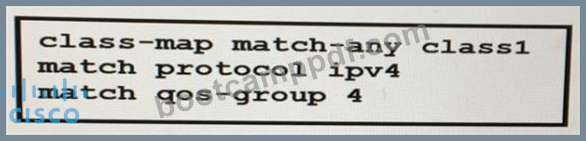
A network engineer is implementing QoS services. Which two statements about the QoS-group keyword on Cisco IOS XR 3re true? (Choose two )
- A. QoS group can be used in fabric QoS policy as a match criteria
- B. It marks packets for end to end QoS pokey enforcement across the network
- C. It cannot be used with priority traffic class
- D. QoS group marking occurs on the ingress
- E. The QoS group numbering corresponds to priority level
Answer: A,D
Explanation:
The QoS-group keyword on Cisco IOS XR is used for marking packets on the ingress of the device. This allows for internal handling and is not transmitted across the network. It can be used in fabric QoS policy as a match criteria to apply specific policies based on the QoS group marking.
NEW QUESTION # 246
A remote operation center is deploying a set of l-BGP and E-BGP connections for multiple IOS-XR platforms using the same template. The l-BGP sessions exchange prefixes with no apparent issues, but the E-BGP sessions do not exchange routes. What causes this issue?
- A. A PASS ALL policy has no! been implemented for the l-BGP neighbors.
- B. The l-BGP neighbors are mistyped and HELLO packets cannot be exchanged successfully between routers.
- C. The next-hop-self command is not implemented on both E-BGP neighbors.
- D. The E-BGP neighbors are not allowed to exchange information doe to the customer platforms default policy.
Answer: D
Explanation:
https://www.cisco.com/c/en/us/td/docs/routers/asr9000/software/asr9k-r6-2/routing/configuration/guide/b-routing-cg-asr9000-62x/b-routing-cg-asr9000-62x_chapter_010.html
NEW QUESTION # 247
Which role does the Adjacency-SID sub-TLV extension perform in the IS-IS routing protocol?
- A. It is advertised within TLV-136 (Extended IP Reachability) to label a specific node n the network.
- B. It is advertised within a TLV-24 (IS-IS Neighbor Adjacency Attribute) to label a specific adjacency between Level1 routers within one IS-IS area.
- C. It is advertised within TLV-22 (Extended IS Reachability) to label a specific link in a segment routing domain.
- D. It is advertised within TLV-145 (IS-IS Prefix Reachability Information) to label host prefixes on loopback interfaces on Level 2 routers within one
Answer: C
Explanation:
The Adjacency-SID sub-TLV extension is advertised within TLV-22 (Extended IS Reachability) to label a specific link in a segment routing domain. This allows for the identification and utilization of specific paths or links within the network, facilitating more efficient routing and traffic management. Reference := Implementing and Operating Cisco Service Provider Network Core Technologies
NEW QUESTION # 248
Refer to the exihibit.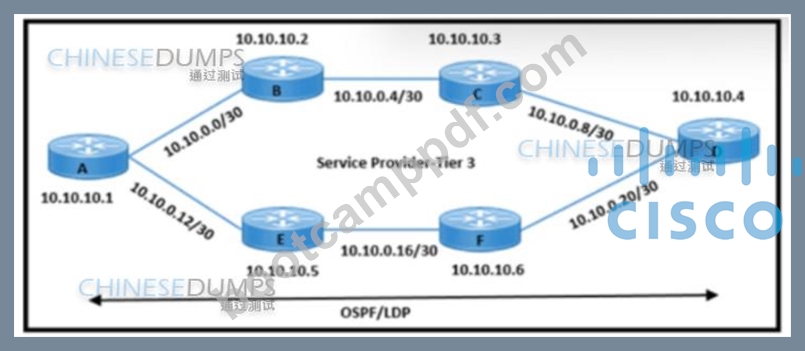
Refer to the exhibit. An engineering team must update the network configuration so that data traffic from router A to router D continues in case of a network outage between routers B and C. During a recent outage on the B-C link, the IGP traffic path was switched to the alternate path via routers E and F. but label forwarding did not occur on the new path. Which action ensures that traffic on the end-to-end path continues?
- A. Configure the same hello timer values for IGP and LDP
- B. Enable LDP Session Protection on routers A and D.
- C. Enable MPLS LDP IGP Synchronization on all routers
- D. Bind the BFD protocol with IGP on all routers
Answer: C
Explanation:
Enabling MPLS LDP IGP Synchronization ensures that the IGP advertises a route only if there is a corresponding label binding from LDP. This synchronization helps prevent blackholing traffic when there is a direct link failure in the network. When the B-C link failed, the IGP could find an alternate path via routers E and F, but without LDP synchronization, the labels for MPLS were not available on this new path, leading to traffic loss. By enabling LDP IGP Synchronization, routers will only use paths for which a complete set of labels exists, ensuring label forwarding occurs on the alternate path.
NEW QUESTION # 249 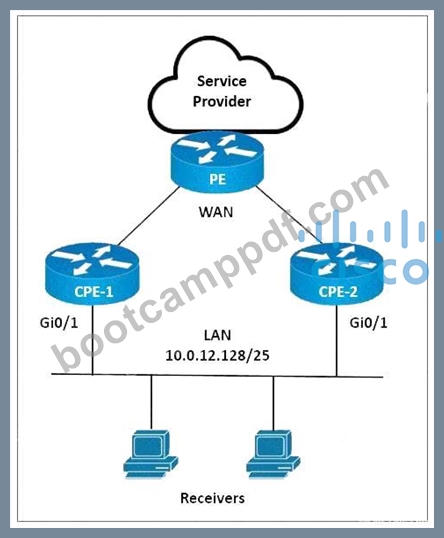
Refer to the exhibit. A network engineer is implementing multicast services on CPE-1 and CPE-2. CPE-1 must be configured as the preferred IGMP querier for the LAN segment. PIM-SM must be implemented on the LAN interfaces with an IGMP version that supports (*, G) joins only. Which configurations must the engineer implement on CPE-1 and CPE-2?
- A. On CPE-1:
interface GigabitEthernet0/1
ip address 10.0.12.130 255.255.255.128
ip pim sparse-mode
ip igmp version 2
On CPE-2:
interface GigabitEthernet0/1
ip address 10.0.12.129 255.255.255.128
ip pim sparse-mode
ip igmp version 2 - B. On CPE-1:
interface GigabitEthernet0/1
ip address 10.0.12.129 255.255.255.128
ip pim sparse-mode
ip igmp version 2
On CPE-2:
interface GigabitEthernet0/1
ip address 10.0.12.130 255.255.255.128
ip pim sparse-mode
ip igmp version 2 - C. On CPE-1:
interface GigabitEthernet0/1
ip address 10.0.12.130 255.255.255.128
ip pim sparse-mode
ip igmp version 3
On CPE-2:
interface GigabitEthernet0/1
ip address 10.0.12.129 255.255.255. 128
ip pim sparse-mode
ip igmp version 3 - D. On CPE-1:
interface GigabitEthernet0/1
ip address 10.0.12.129 255.255.255.128
ip pim sparse-mode
ip igmp version 3
On CPE-2:
interface GigabitEthernet0/1
ip address 10.0.12.130 255.255.255.128
ip pim sparse-mode
ip igmp version 3
Answer: B
NEW QUESTION # 250
Refer to the exhibit: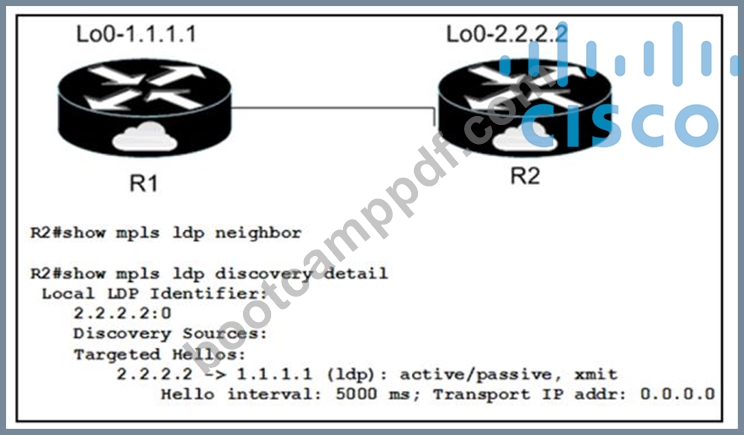
When implementing an LDP protocol, an engineer experienced an issue between two directly connected routers and noticed that no LDP neighbor exists for 1.1.1.1.
Which factor should be the reason for this situation?
- A. LDP needs to be enabled on the R2 loopback interface
- B. LDP needs to be enabled on the R2 physical interface
- C. R2 sees the wrong type of hellos from R1
- D. R2 does not see any hellos from R1
Answer: D
Explanation:
The issue of no LDP neighbor existing for 1.1.1.1 between two directly connected routers could be due to R2 not receiving any hellos from R1. In the context of LDP (Label Distribution Protocol), hellos are used for the discovery of LDP peers. They are sent periodically on each interface that LDP is enabled on to discover and maintain LDP sessions with neighbors. If R2 is not seeing any hellos from R1, it means there's a failure in the initial step of establishing an LDP session, hence no neighbor relationship is formed.
NEW QUESTION # 251
Refer to the exhibit. Which information is provided for traceback analysis when this configuration is applied?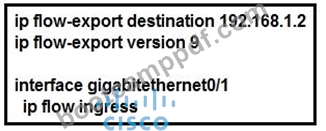
- A. packet size distribution
- B. BGP version
- C. source interface
- D. IP sub flow cache
Answer: D
NEW QUESTION # 252
Which two PHY modes are available to implement an IOS XR Gigabit Ethernet interface interface? (Choose two.)
- A. MAN
- B. LAN
- C. WAN
- D. SONET
- E. WDWM
Answer: D,E
NEW QUESTION # 253
A network engineer must enable the helper router to terminate the OSPF graceful restart process if it detects any changes in the LSA. Which command enables this feature?
- A. nsf ietf helper strict-lsa-checking
- B. nsf Cisco helper disable
- C. nsf cisco enforce global
- D. nsf ietf helper disable
Answer: A
Explanation:
The command nsf ietf helper strict-lsa-checking is used to configure the router to terminate the OSPF graceful restart process if it detects any changes in the LSA during the restart. This ensures that the network remains stable and consistent by preventing the use of outdated or incorrect routing information.
NEW QUESTION # 254
Refer to the exhibit. A network engineer is implementing multicast Source-A to send a multicast stream for Receiver-A, and multicast Source-B to send a multicast stream for Receiver-B. Router RC forwards the IGMP host a report and leaves messages to IP address 192.168.10.1. How must the multicast features be implemented to prevent RB from receiving multicast flooding from Source-A?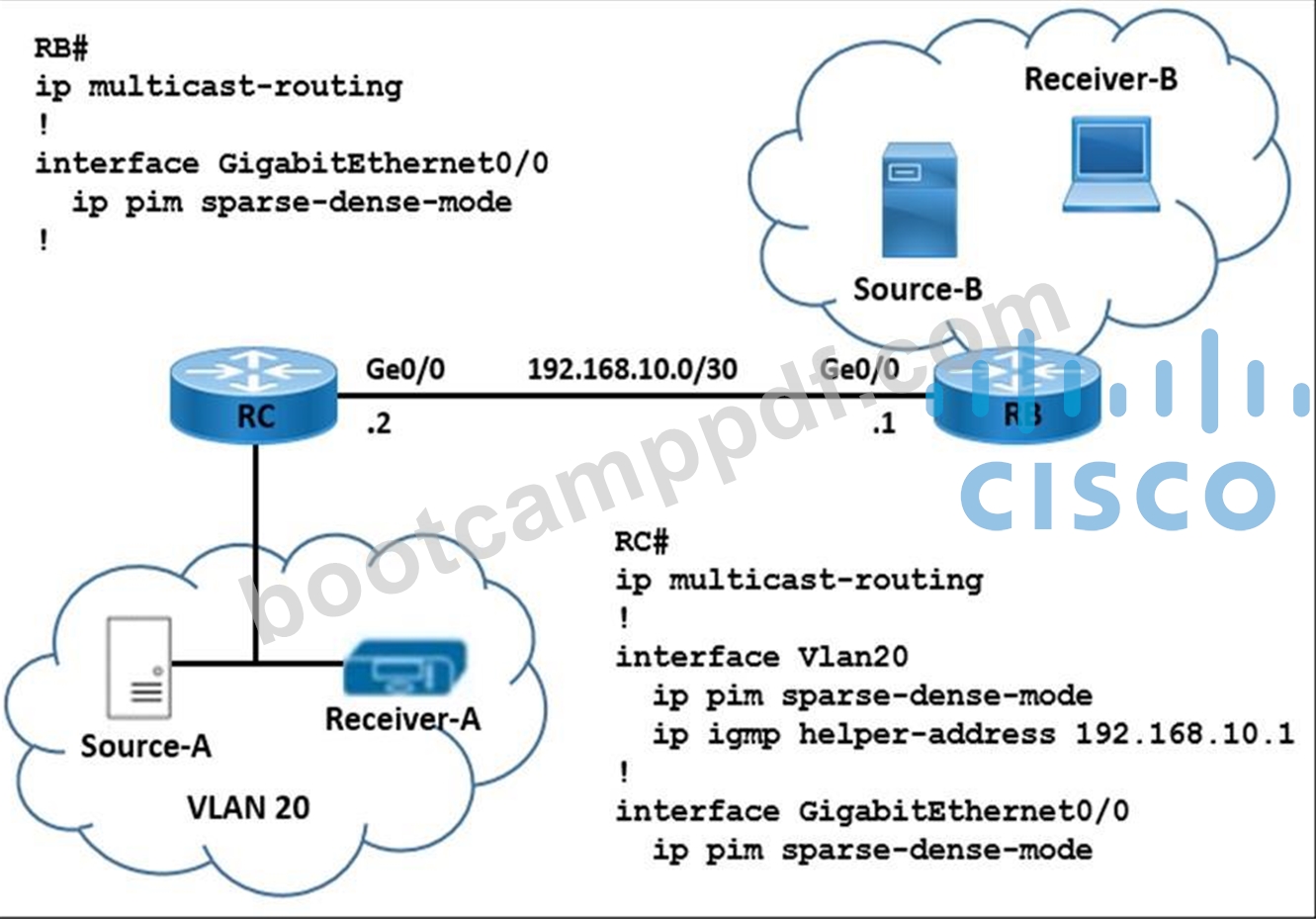
- A. Enable ip pim passive on RB interface Ge0/0.
- B. Configure PIM-SSM on RB and RC interface Ge 0/0.
- C. Change the helper-address value to 192.168.10.2 on RC.
- D. Enable ip pim neighbor-filter on RC interface Ge0/0.
Answer: A
NEW QUESTION # 255
Refer to the exhibit.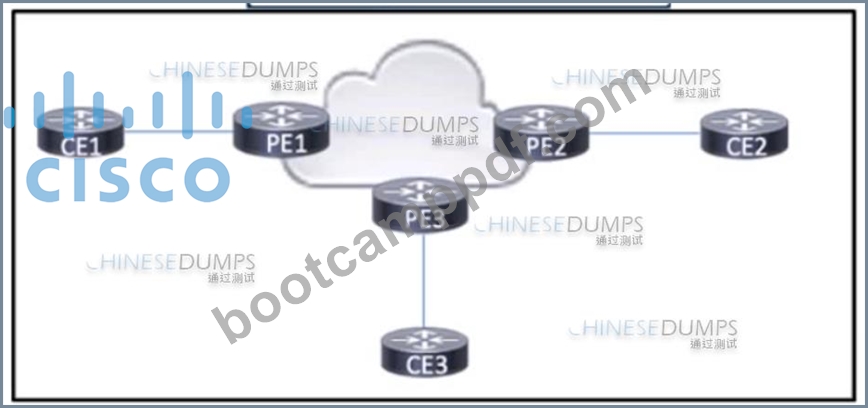
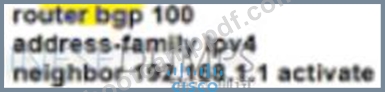
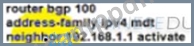
Refer to the exhibit. A large enterprise has multiple branch offices that span several geographic regions. The enterprise runs MPLS within the core to propagate VPNv4 routes using BGP. After a recent series of DDoS attacks disrupted the network, a network engineer has been asked to reconfigure BGP to help mitigate future attacks. Which configuration must the engineer apply?
- A.
- B.

- C.
- D.
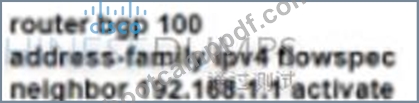
Answer: D
NEW QUESTION # 256 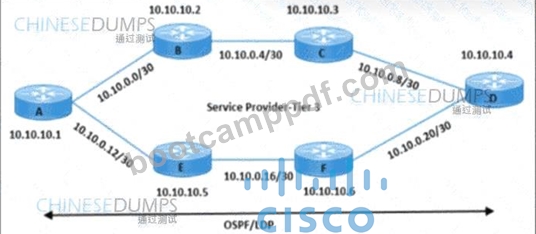
Refer to the exhibit. An engineering team must update the network configuration so that data traffic from router A to router D continues in case of a network outage between routers B and C. During a recent outage on the B-C link, the IGP traffic path was switched to the alternate path via routers E and F. but label forwarding did not occur on the new path. Which action ensures that traffic on the end-to-end path continues?
- A. Configure the same hello timer values for IGP and LDP
- B. Enable LDP Session Protection on routers A and D.
- C. Enable MPLS LDP IGP Synchronization on all routers
- D. Bind the BFD protocol with IGP on all routers
Answer: C
Explanation:
Enabling MPLS LDP IGP Synchronization ensures that the IGP advertises a route only if there is a corresponding label binding from LDP. This synchronization helps prevent blackholing traffic when there is a direct link failure in the network. When the B-C link failed, the IGP could find an alternate path via routers E and F, but without LDP synchronization, the labels for MPLS were not available on this new path, leading to traffic loss. By enabling LDP IGP Synchronization, routers will only use paths for which a complete set of labels exists, ensuring label forwarding occurs on the alternate path.
The information provided is based on the Implementing and Operating Cisco Service Provider Network Core Technologies (SPCOR) course materials, which cover the configuration, verification, troubleshooting, and optimization of Service Provider IP network infrastructures, including MPLS LDP IGP Synchronization
NEW QUESTION # 257
Refer to the exhibit. R1 is connected to two service providers and is under a DDoS attack.
Which statement about this design is true if uRPF in strict mode is configured on both interfaces?
- A. R1 permits asymmetric routing as long as the AS-RATH attribute entry matches the connected AS
- B. R1 drops all traffic that ingresses either interface that has a FIB entry that exits a different interface
- C. R1 accepts source addresses on interface gigabitethernet0/1 that are private addresses
- D. R1 drops destination addresses that are routed to a null interface on the router
Answer: B
Explanation:
https://www.cisco.com/c/en/us/td/docs/ios-xml/ios/sec_data_urpf/configuration/xe-16/sec-data- urpf-xe-16-book/cfg-unicast-rpf.html
NEW QUESTION # 258
Refer to the exhibits: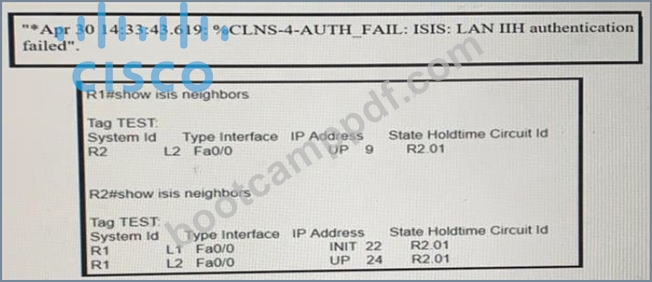
R1 and R2 are directly connected and IS-IS routing has been enabled between R1 and R2 R1 message periodically Based on this output, which statement is true?
- A. 1S-1S neighbor authentication is failing for Level 1 and Level 2 PDUs .
- B. IS-IS neighbor authentication is failing for Level 2 PDUs only.
- C. IS-IS neighbor authentication is failing for Level 2 first and then for Level 1 PDUs
- D. IS-IS neighbor authentication is failing for Level 1 PDUs only
Answer: A
Explanation:
The error message "%CLNS-4-AUTH_FAIL: ISIS: LAN LIIH authentication failed" indicates that there is an authentication failure in the IS-IS routing protocol between routers R1 and R2. In the exhibit, it can be observed that R2 has a state of "UP" for its IS-IS neighbor relationship, while R1 is in "INIT" state. This discrepancy in states indicates an issue with the establishment of the neighbor relationship, which can be attributed to an authentication failure at both Level 1 and Level 2 PDUs as indicated by option B.
NEW QUESTION # 259 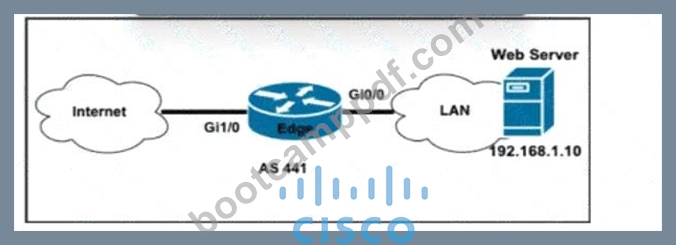
Refer to the exhibit. The network manager asked a network engineer to increase data-plane security on an Edge router connected to the internet with these requirements:
*Allow incoming HTTP traffic from any source to the Web server with IP address 192.168.1.10.
*Allow incoming SSH traffic from the management host with IP address 10.0.0.10.
*Block incoming Telnet traffic from all sources.
Which action must the engineer take to meet the requirements?
- A. Implement an access control list under the Gi1/0 interface.
- B. Implement uRPF under the Gi1/0 interface.
- C. Implement Network Address Translation under the Gi0/0 interface.
- D. Implement port security under the Gi0/0 interface.
Answer: A
NEW QUESTION # 260
Refer the exhibit.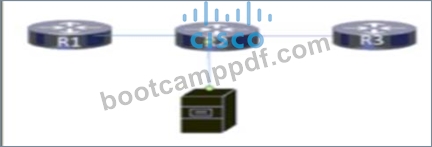
Users on a network connected to router R3 report slow speeds when they connect to the server connected to R2. After analyzing traffic on the network, a network engineer identified congestion on the link between R2 and R3 as the cause. Which QoS service must the engineer implement to drop traffic on the link when it exceeds a configured threshold?
- A. traffic shaping
- B. traffic policing
- C. first-in, first-out
- D. class-based weighted fair queueing
Answer: B
Explanation:
https://www.cisco.com/c/en/us/support/docs/quality-of-service-qos/qos-policing/19645-policevsshape.html
NEW QUESTION # 261
An engineer working for a private telecommunication company with an employe id:3948:613 needs to limit the malicious traffic on their network. Which configuration must the engineer use to implement URPF loose mode on the GigabitEthernet0/1 interface?
- A.
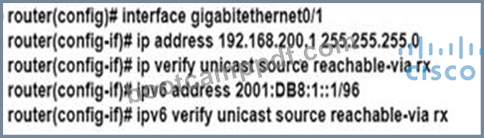
- B.
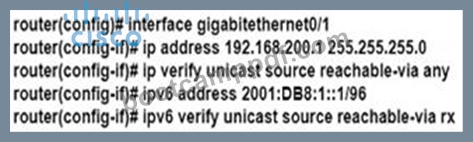
- C.
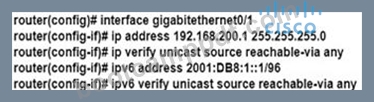
- D.
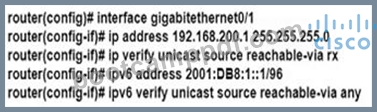
Answer: C
Explanation:
The configuration in Option A is used to implement URPF in loose mode on the GigabitEthernet0/1 interface.
Loose mode allows the router to check for any route back to the source, not necessarily the best route.
By enabling URPF, the router ensures that incoming packets have a valid return path in the routing table.
This helps prevent IP spoofing and limits malicious traffic on the network.
Reference:
Implementing and Operating Cisco Service Provider Network Core Technologies On-Demand E-Learning
NEW QUESTION # 262
......
Cisco 350-501 exam is a certification exam that focuses on the implementation and operation of Cisco Service Provider Network Core Technologies. It is intended for individuals who are interested in pursuing a career in the field of networking and who want to validate their skills and knowledge in this area. 350-501 exam covers a variety of topics, including network architecture, network services, security, automation, and troubleshooting.
Cisco 350-501 certification exam focuses on validating one’s skills and knowledge in service provider core networking technologies. Aspiring professionals in network operations and support can utilize this certification to prove their expertise in implementing and operating core service provider network technologies, which ultimately leads to greater professional advancement.
Exam Topics
Cisco 350-501 will validate the professionals’ understanding of applying the core service provider network technologies, such as core architecture, networking, services, automation, quality of services, network assurance, and security. All in all, the overall content consists of 5 subject areas that are listed below:
Architecture: 15%
- Describing service provider virtualization, such as VNF workloads, OpenStack, and NFV infrastructure;
- Describing the QoS architecture (MPLS TE QoS, IPv6 flow label, DiffServ & IntServ QoS models, and MPLS QOS models);
- Describing management plane security;
- Implementing data plane security (RTBH, uRPF, and ACLs).
PDF Download Cisco Test To Gain Brilliante Result!: https://www.bootcamppdf.com/350-501_exam-dumps.html
Provide Updated Cisco 350-501 Dumps as Practice Test and PDF: https://drive.google.com/open?id=1IhbTOmakNG_IrZsHINcPBdsH-jKBEzRC